
Bridgewater, NJ · Garage Door Service
Garage Door Repair in Bridgewater, NJ
Garage door repair for Bridgewater, NJ homes built mostly in the 1960s and 70s, where cold winters and original hardware combine to wear out springs and openers fast.
- Repairs & new doors
- Springs & openers
- Serving 6 nearby communities
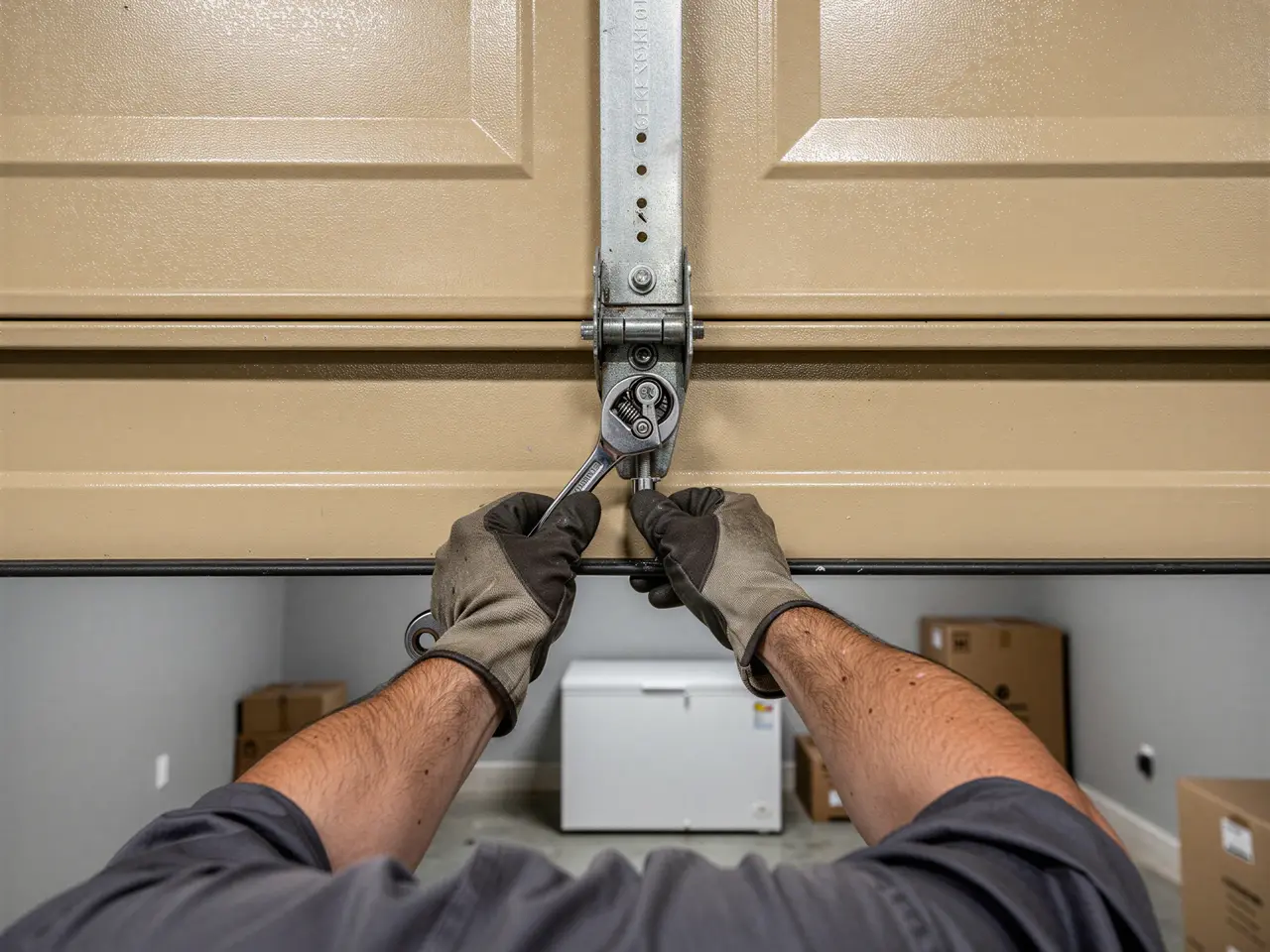
What You Are Seeing
Most calls we get in Bridgewater start the same way: the door won't go up, or it goes up and slams back down. Sometimes it's a loud bang from the garage followed by a door that won't budge - that's almost always a torsion spring snapping. Other times the opener hums but the door doesn't move, which points to a stripped gear or a cable that's jumped the drum.
Houses in this area were mostly built between 1938 and 2001, with the median landing around 1966, and a lot of that stock is concentrated in 1960s and 70s construction. That matters because doors and openers installed or replaced in that era used hardware sizing and mounting styles that don't match what's sold today. A torsion spring rated for a door built in 1968 isn't the same part number as one for a door built last year, even if the opening looks identical.
If your door is dragging on one side, making a grinding noise at the top of the track, or the remote works some days and not others, you're looking at wear that's been building for years, not a sudden failure. We can usually tell which one it is before we open the panel.
How We Fix It
For a broken torsion spring, we match the wire size, wind, and length to the door and hardware already on the house rather than swapping in a generic kit - on older Bridgewater homes that often means measuring the shaft and drum instead of trusting a sticker that's faded off decades ago. Cables get replaced in pairs, not one at a time, because a mismatched pair puts uneven tension on the drums and you're back to a stuck door in a few months.
Opener issues get diagnosed at the logic board and the drive gear before we touch the motor. On homes with original 1960s and 70s track systems, the opener has often been swapped once already, but the track and header bracket haven't - so we check that the newer opener is actually rated for the travel distance and weight of the original door, which is a common mismatch we find.
Rollers, hinges, and the bottom seal get inspected as part of the same visit, since a door that's fighting worn rollers puts extra load on whatever spring or cable we just replaced. We test the balance by hand before we leave - a properly balanced door should hold at waist height without the opener holding it there.
Where This Job Goes Sideways
The repair that goes wrong is almost always the one where someone replaces a spring without checking the drums, cables, and bearing plates underneath it. On a door that's been running since the 1960s or 70s, those parts have the same mileage as the spring that just broke, and a new spring on worn bearings fails again within a year.
The other common mistake is matching opener horsepower to door weight without accounting for winter. In a cold-climate winter like ours, a steel door that's picked up moisture in its panels, or an older wood door that's swollen slightly, weighs more than it does in summer. An opener sized for the door's summer weight will strain and burn out its gear in January.
We'll be straight with you here: if a door is original to a house built in the 1960s and the track, rollers, and springs are all original too, replacement is usually the better call financially than another round of parts. We'll tell you when we think that's the case instead of running up a repair bill on a door that's at the end of its service life.
Why It Happens Here
Bridgewater's housing stock skews toward construction from the 1960s and 70s, part of a broader pattern across the roughly 100 named areas in this part of the region that saw similar building waves. That means a large share of garage doors and their hardware are either original or one generation removed from original - old enough that wear is cumulative, not sudden.
Layer in a cold climate with a severe winter season, and you get a specific failure pattern: steel contracts in the cold, torsion springs lose a bit of tension every winter they cycle through freeze and thaw, and cables that were fine in October start showing fray by February. This isn't a design flaw in the door - it's what forty-plus winters do to hardware that was never meant to last that long without service.
We see this pattern across the area, from homes near Raritan and Somerville through to the Martinsville and Branchburg side of town, wherever that 1960s-70s building wave landed.
Frequently asked questions
Why did my garage door spring break in the middle of winter?
Torsion springs lose tension gradually every time they cycle through cold weather, and a severe winter accelerates that. On a spring that's original to a 1960s or 70s install, decades of freeze-thaw cycling is often the final push that snaps a spring that was already near the end of its life.
Is my opener too small for my door?
It can be, especially if the opener was swapped at some point but the original door and track weren't. We check the opener's rated weight and travel distance against your actual door before assuming the motor itself is the problem.
Should I repair or replace an original 1960s door?
If the spring, cables, rollers, and track are all original, repairing one part usually just shifts the failure to the next worn part. We'll look at the whole system and tell you honestly whether another repair makes sense or replacement is the better spend.
How fast does a broken cable need attention?
Don't operate the door once a cable has jumped the drum or frayed through - the opposite cable is now carrying load it wasn't built for and can snap too. Leave the door down, don't force the opener, and call before you try it again.
Related services
Related guides
By Neighborhood
Garage Door Repair across the Bridgewater area
We also handle garage door repair in these Bridgewater-area suburbs.
Book garage door service in Bridgewater
Call now or request a quote - tell us what the door is doing and where you are.