Bridgewater, NJ · Garage Door Service
Garage Door Opener Installation, Bridgewater NJ
Opener installation and replacement for Bridgewater homes built mostly in the 1960s and 70s, sized for cold-climate doors and older track setups.
- Repairs & new doors
- Springs & openers
- Serving 6 nearby communities
What You Are Seeing
If your opener is grinding, reversing itself, or just not pulling the door up anymore, you're not alone in this area. Bridgewater's housing stock runs from 1938 to 2001, with the median build year sitting around 1966, and that 1960s-70s wave of construction shows up across most of the roughly 100 named neighborhoods in this part of Somerset County. A lot of those houses still have the original chain-drive opener, or a second-generation replacement that's now pushing 20 years old. The symptom you're seeing - a motor that hums but won't lift, a remote that works from three feet away and nowhere else, a unit that slams the door down instead of lowering it - usually traces back to age, not a one-time glitch. Openers built before the mid-2000s also lack the safety reversal sensors required on new installs, which matters if you've got kids or cars in that garage. We're not here to sell you a motor you don't need, but when the gearing is worn or the logic board is dead, limping along costs more in service calls than one proper install.
How We Fix It
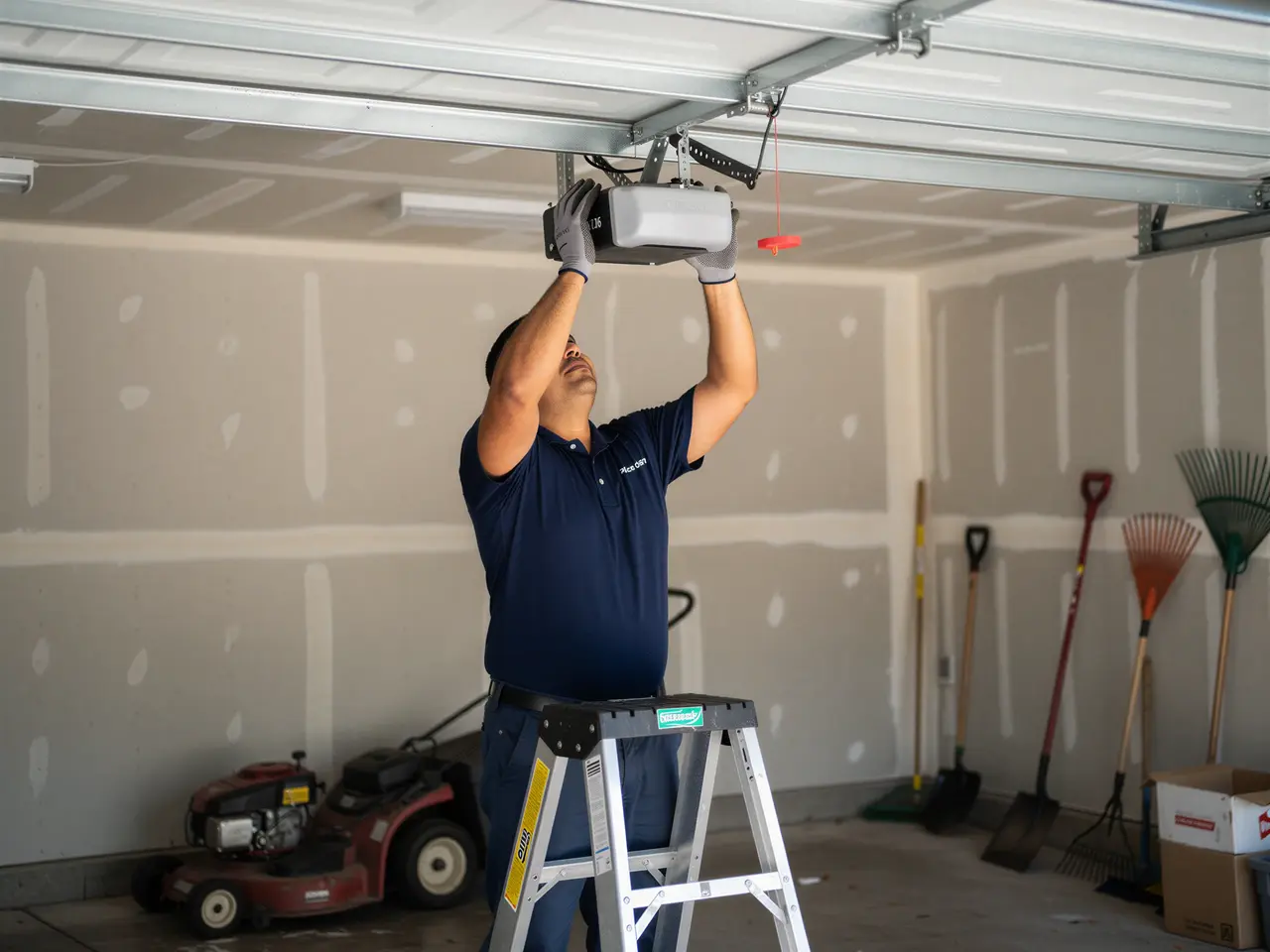
We pull the old unit, check the header above the door for rot or old mounting damage (common on original 60s and 70s framing), and set a new opener sized to the door's weight and spring tension - not a one-size-fits-all box off the shelf. That includes rehanging the rail, setting travel limits, and wiring in safety sensors if the old setup never had them. On a double garage with a heavier insulated door, we size the motor accordingly; an undersized unit on a heavy door is one of the fastest ways to burn out a new opener in under a year. We also test the manual release and battery backup if the home's circuit setup calls for it. One honest limitation: if your track or rollers are shot, we'll say so before we hang a new motor on bad rails - putting a new opener on a worn track just moves the failure point, it doesn't fix it.
Where This Job Goes Sideways
The install itself is straightforward. Where it goes wrong is when nobody checks what's actually on the door before ordering the opener. A lot of Bridgewater garages still run the original torsion spring setup from when the house was built, and if that spring is undersized or near end of life, a new opener will fight it every cycle - straining the motor and stripping gears early. We also see older homes where the header framing was never built to carry a heavier insulated door, so when a homeowner upgrades the door and the opener at the same time, the mounting point needs reinforcing first. Skip that step and the new unit sags or pulls loose within months. The other place this goes sideways is winter installs: in a cold-climate area like this, grease in an old track thickens and the door drags, which can look like an opener problem when it's really a lubrication and hardware issue that needs addressing before the motor goes in.
Why It Happens Here
This comes down to the age of the housing and the weather, not bad luck. With most of the service area's stock dating to the 1960s and 70s, a huge share of openers out there are original or first-replacement units well past their expected service life. Add a COLD climate band with real winter severity, and you get thermal cycling that stresses gears, belts, and plastic housings twice a day, every day, for months. Across the roughly 395,026 households and 186,270 owner-occupied houses in this service area, that's a lot of garages built to a mid-century standard now running hardware designed for a different era. With a median household income near $130,938 in the area, most homeowners we talk to would rather do one correct install than keep patching a dying opener every winter - and given how many houses here share that same age and exposure, that's usually the right call.
Frequently asked questions
How do I know if it's the opener or the spring?
If the door is heavy to lift by hand with the opener disconnected, that's a spring problem, not an opener problem. If the door moves fine by hand but the motor struggles, stalls, or reverses on its own, the opener is the likely cause. We check both before replacing anything.
Will a new opener work with my old garage door?
In most cases yes, as long as the door and track are in decent shape. Given how much of the housing in this area dates to the 1960s and 70s, we often find older hardware that needs a check or minor repair alongside the new opener, which we'll flag before installing.
Do newer openers need anything my old wiring doesn't have?
Modern openers include safety reversal sensors that older units didn't require, so we run new sensor wiring on most replacements. This is especially common on homes with original 1960s-70s electrical that predates current code.
Can I just replace the motor and keep the old rail and sensors?
Sometimes, but we check condition first. On an opener that's original to a 1960s or 70s build, the rail and sensors are usually as worn as the motor, and mixing old hardware with a new unit is a common reason installs fail early.
By Neighborhood
Opener Installation across the Bridgewater area
We also handle opener installation in these Bridgewater-area suburbs.
Book garage door service in Bridgewater
Call now or request a quote - tell us what the door is doing and where you are.