
Bridgewater, NJ · Garage Door Service
Garage Door Installation in Bridgewater, NJ
New garage door installation for Bridgewater, NJ homes built 1938-2001, matched to original framing and sized for cold-climate hardware. Local, upfront, no guesswork.
- Repairs & new doors
- Springs & openers
- Serving 6 nearby communities
What You Are Seeing
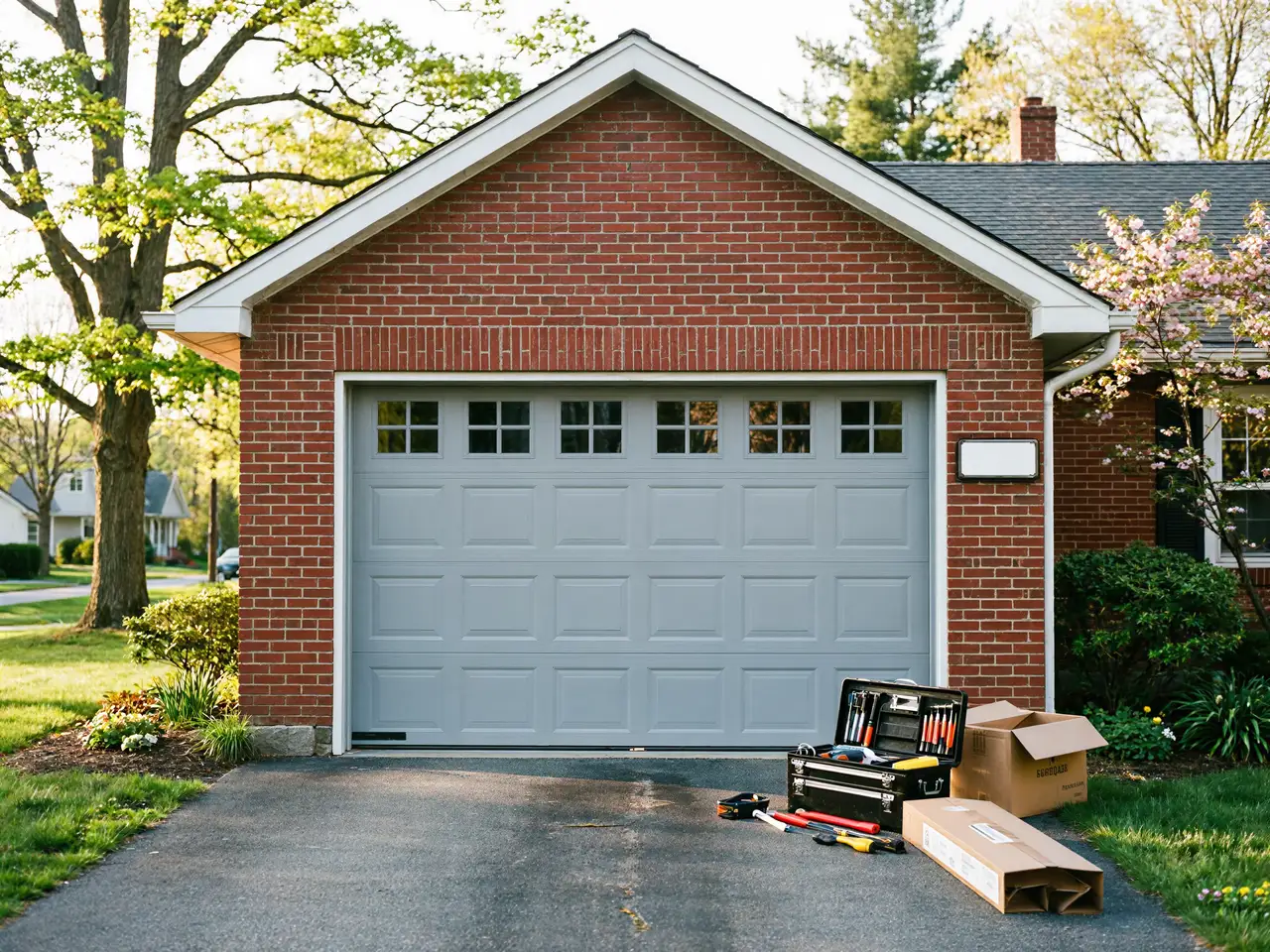
If you're looking at a quote for a new garage door in Bridgewater, you're probably dealing with one of two things: a door that's finally past fixing, or an opening that was never quite standard to begin with. Housing stock here runs 1938 to 2001, with a median build year around 1966, so a lot of these openings were framed before steel sectional doors were the default. That means the rough opening on your house might be a half-inch narrower or an inch taller than what a big-box door comes in off the shelf. Homeowners usually find this out the hard way, after a door's already been ordered. The other version of this job: the old door still rolls, but the panels are bowed, the insulation is gone, and it's costing you on the heating bill every month this winter brings. Either way, installation here isn't a drop-in job you can price from a web form. It starts with measuring what's actually there, not what the listing says should be there.
How We Fix It
We measure the opening, track space, and headroom before we talk product, because on a house built in the 1960s or 70s - which covers most of the stock across this area - the jamb and header are often not square and not to current spec. We size the door and track to match what's actually framed, not a catalog number. For replacement jobs, that usually means new track and hardware even when the opening doesn't change, since original one-piece hardware doesn't pair with a modern sectional door. Given the cold-climate band this area sits in, we default to insulated steel doors with sealed bottom and side weatherstripping rated for that kind of cold - not because it's an upsell, but because an uninsulated door on an attached garage here means a genuinely cold wall most winters. Installation includes setting new springs sized to the door's actual weight, not a universal spring kit. We don't install doors we haven't measured in person first. If the opening needs framing work beyond the door itself, that's a separate conversation, and we'll tell you before we quote the install, not after.
Where This Job Goes Sideways
The most common mistake we see corrected after the fact: someone orders a standard 16x7 door online, and it doesn't fit openings framed in the 1960s-70s era that are common across this part of the county, because those openings were often built to slightly different dimensions than today's manufacturer defaults. The second mistake is reusing old track with a new door - it looks like it saves money, but track wear you can't see from the floor shows up as a door that won't seal evenly, which defeats the point of buying an insulated door in a cold-winter area in the first place. Third: springs. A spring sized for the old wood door is wrong for a new steel insulated one, and an undersized spring on a heavier door is how openers burn out early or cables snap under load. None of this is unique to any one house - it's what happens when a door bought for a generic opening meets a house built to an older, often non-standard frame. We flag it before the order goes in, not during the install.
Why It Happens Here
This area's housing stock - mostly built between 1938 and 2001, with the bulk from the 1960s and 70s - means garage openings were framed to whatever standard a builder was using at the time, which wasn't always what today's manufacturers assume. That's not a defect, it's just the math of a house that's 50 to 85 years old. Combine that with a cold climate band that calls for real insulation and sealed weatherstripping, and you get a job where off-the-shelf sizing and generic hardware both tend to fail at once. With household incomes here running well above the national median, most owners we talk to want one correct install, not a cheap one redone in three years. That's the bet we make on sizing and hardware up front, even when it means a slightly longer measure visit.
Frequently asked questions
How do I know if my garage opening is non-standard?
If your house was built in the 1960s or 70s, which is common in this area, there's a real chance the rough opening doesn't match a modern sectional door's standard sizing. We measure width, height, track space, and headroom before quoting, because guessing from the old door's label isn't reliable on houses this age.
Do I need an insulated door in this area?
Given the cold climate band this region sits in, we recommend an insulated steel door with sealed weatherstripping for any attached garage. It's not required by anything we install, but an uninsulated door on an attached garage here usually means a noticeably colder wall through the winter months.
Can you reuse my old track and springs with a new door?
Usually no. Old one-piece door hardware doesn't match new sectional door specs, and springs sized for your old door's weight won't be correct for a new insulated steel one. We size new springs and track to the actual door going in, not the one coming out.
What if my framing needs work beyond the door itself?
That happens on some older openings, and we'll tell you at the measure visit, before any quote - not mid-install. Framing repair is a separate job from door installation, and we don't fold surprise carpentry costs into a door quote after the fact.
Book garage door service in Bridgewater
Call now or request a quote - tell us what the door is doing and where you are.