
Bridgewater, NJ · Garage Door Service
Garage Door Roller Replacement, Bridgewater NJ
Worn or seized rollers on older Bridgewater-area doors. We explain what's failing, how we replace rollers, and why 1960s-70s tracks wear this way here.
- Repairs & new doors
- Springs & openers
- Serving 6 nearby communities
What You Are Seeing
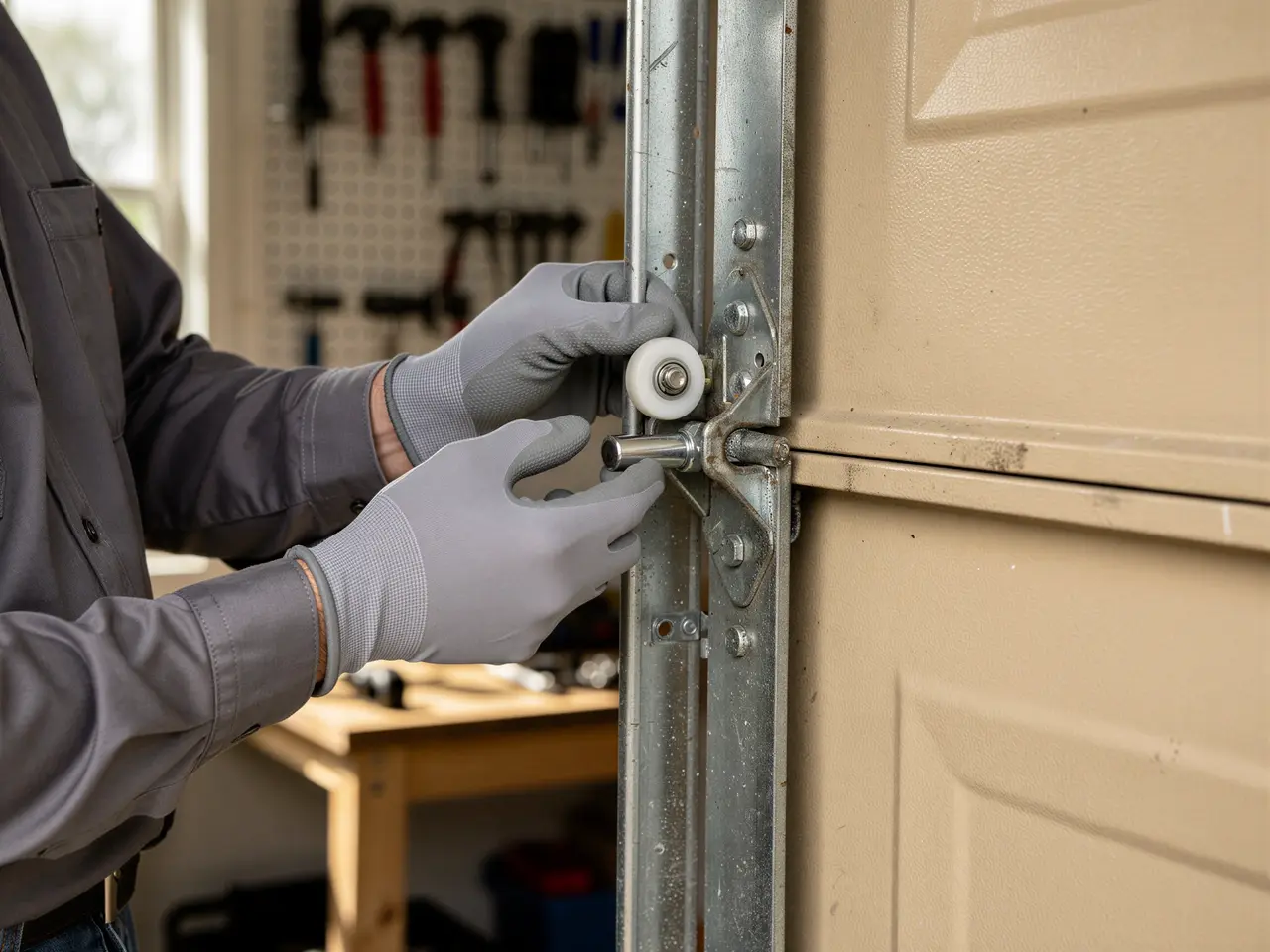
The door jerks instead of gliding, or it grinds through one spot on the track every single cycle. Sometimes you hear a clack-clack-clack as a flat-spotted roller hits the bend where the vertical track curves into the horizontal section. On older steel rollers without nylon tires, you'll also see rust flaking off onto the garage floor, or a stem that's worn thin enough to wobble in its bracket. If only one side of the door is noisy, check that side first - a seized roller on one track forces the opener to drag the whole panel sideways, which is why people often think the opener is dying when it's really a two-dollar roller doing the damage. In homes with the original steel track and steel rollers, you may also see shiny wear grooves where metal has been rubbing metal for years instead of rolling. None of this is dangerous by itself, but a roller that snaps off mid-cycle can drop a panel corner or bind the door halfway open, which turns a simple swap into an after-hours call.
How We Fix It
We pull the door down, unload the tension from the opener arm, and check each roller stem and bracket before we touch anything - a bent bracket needs straightening or replacing, not just a new roller. Rollers come off the track one at a time working from the bottom section up, since the door has to stay supported the whole time. We typically replace with nylon rollers with sealed bearings, which run quieter and don't rust the way the original steel ones did. If the track itself has a worn groove or a kink from years of a bad roller dragging through it, we true it up or swap the section rather than putting a new roller into a track that will just chew it up again in a season. Last step is cycling the door by hand before we hand it back to the opener, listening for anything still catching. The honest limitation here: if the track brackets are rusted through or the jamb they're bolted to has shifted, roller replacement alone won't fix the noise - that's a track or frame repair, and we'll tell you that before we start rather than after.
Where This Job Goes Sideways
The common mistake is replacing the rollers but leaving a bent track section in place, so the new rollers wear the same flat spot within a few months. Another is forcing a roller stem into a bracket that's already spread from years of a heavier, unbalanced door - that's a spring or cable problem wearing on the roller, not a roller problem on its own, and swapping parts without checking balance first just repeats the call. We also see owners try to lubricate a seized roller rather than replace it; grease quiets a bearing for a week, but a stem that's rusted into the bracket is going to snap eventually, usually at the worst time. If your door is original to a house built in the 1960s or earlier, there's a decent chance the track gauge and roller stem size don't match what's sold off the shelf today, which is why we carry a few sizes rather than assuming one fits all.
Why It Happens Here
A lot of the housing stock in this part of Bridgewater and the surrounding towns - Raritan, Somerville, Martinsville, Branchburg, Bedminster - was built between 1938 and 2001, with most of it going up in the 1960s and 70s. That generation of doors came with steel rollers on steel track, no nylon, no sealed bearing, and that combination doesn't age well under a Northeast winter. This area sits in a cold, severe climate band, which means repeated freeze-thaw cycles through the cold months - moisture gets into the roller stem and bracket, freezes, expands, and works the metal loose a little more each season. Add road salt tracked in on tires and the steel rollers common in these decades corrode faster than the nylon rollers used in newer construction. We see the same pattern across the service area: older track geometry, steel rollers, and a winter that never quite lets the rust stop. It's less about any one house and more about when this whole stretch of towns was built and what the winters here do to steel hardware year after year.
Frequently asked questions
How many rollers does a garage door usually need replaced at once?
Most doors have 10 to 12 rollers, and if one has failed from age or rust, the others are usually close behind since they went in at the same time. We generally recommend doing the full set rather than one at a time, so you're not back under the door again next season for the next one to go.
Can I just lubricate noisy rollers instead of replacing them?
Lubricant helps a roller that's just dry, but it won't fix a bent stem, a flat spot, or rust pitting in the bearing. If the noise comes back within a week or two of oiling, the roller itself is worn and needs to come out, not just get quieter for a cycle or two.
Will new rollers fix a door that's hard to lift by hand?
No - a door that's hard to lift by hand points to a spring problem, not a roller problem. Rollers cause noise, grinding, and jerky movement along the track. If the door feels heavy or won't stay partway open, that's spring tension, and it needs to be checked separately.
By Neighborhood
Roller Replacement across the Bridgewater area
We also handle roller replacement in these Bridgewater-area suburbs.
Book garage door service in Bridgewater
Call now or request a quote - tell us what the door is doing and where you are.