
Bridgewater, NJ · Garage Door Service
Safety Sensors Drifting Out of Alignment in Bridgewater Homes
Why safety sensors on Bridgewater garage doors drift out of alignment, what it costs to fix, and how the area's older housing stock and cold winters make it worse.
- Repairs & new doors
- Springs & openers
- Serving 6 nearby communities
What It Costs
We don't have a fixed number to quote you here without seeing the job, so we won't make one up. What drives the cost on a sensor call is usually how the bracket was mounted in the first place. A lot of garages in this area were built between 1938 and 2001, with most of the stock going up in the 1960s and '70s, and the sensor brackets from that era are often screwed straight into wood trim that's shifted over fifty-plus years. If the wood is sound, it's a quick realignment. If the trim has rotted or pulled away from the slab, you're paying for a new mounting point, not just a new sensor. We'll tell you which one you've got before we touch anything, not after.
One honest limitation: if your opener itself is original to a 1960s build, we may recommend replacing the opener rather than patching sensors onto an outdated unit. Chasing drift on a forty-year-old system isn't worth your money.
Checking It Yourself
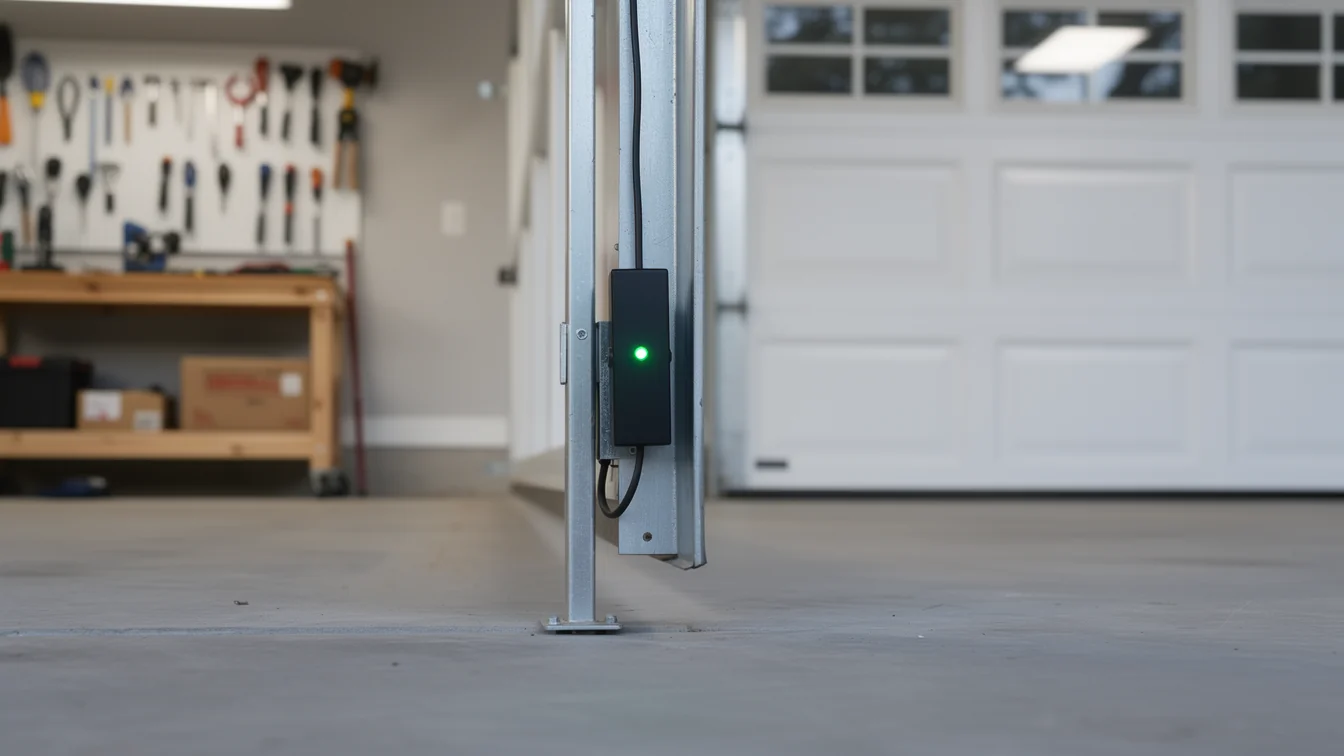
Before you call anyone, look at the two sensors low on either side of the track, roughly six inches off the garage floor. Each one should have a steady LED, not a blinking one. If one blinks, it's not seeing its partner across the opening - that's the drift.
Run your hand along the bracket. In homes from the 1960s and '70s stock common here, these brackets are often mounted to original wood jambs rather than the concrete or steel framing newer builds use, and that wood moves with humidity and seasonal temperature swings. A quarter-inch shift in the bracket is enough to break the beam.
Wipe both lenses with a dry cloth - cold-weather condensation and road salt track dust onto them more than people expect. Then check for anything blocking the beam: a stored bike, a bag of ice melt, a bin left mid-floor. If the LEDs steady up after cleaning and clearing the path, you've solved it yourself. If they still blink after that, the bracket itself has moved and needs to be reset and re-tightened, which usually calls for a level and a steady hand, not force.
How Local Conditions Play In
This area sits in a cold climate zone with severe winter conditions, and that's the single biggest reason sensor brackets drift here more than they would somewhere milder. Freeze-thaw cycles move concrete slabs and wood framing a little bit every winter - not enough to notice day to day, but enough over a few seasons to walk a bracket out of true alignment. Garages built on the older end of the 1938-2001 range take this harder because the original framing wasn't engineered with today's thicker insulation and vapor barrier standards in mind.
Salt and sand tracked in off driveways also cakes onto sensor lenses faster in winter, and condensation from a warm car pulled into a cold garage fogs the lens housings. Both read to the opener as an obstruction, even when nothing is actually in the way. We see more sensor calls in late winter and early spring than any other time of year, right as the freeze-thaw cycle settles and homeowners notice the door hasn't been closing clean all season.
What Is Going On
Nine times out of ten when a Bridgewater homeowner calls about a door that won't close, or closes and reverses halfway, it's not the opener motor and it's not the spring. It's one of the two safety sensors reading an obstruction that isn't really there, because the beam between them has gone slightly off-axis.
Given that most garages in this service area date to the 1960s and '70s, with the broader range running 1938 to 2001, the sensor brackets in a lot of these homes have been knocked, nudged, or settled at least once since install - sometimes by a car bumper, sometimes by the building itself moving with the seasons. The fix is almost always mechanical, not electrical: loosen the wing nut, re-aim the sensor until both LEDs read solid, and tighten it back down. Where it gets more involved is when the original wood mounting point has deteriorated enough that it won't hold alignment no matter how many times you reset it. At that point the bracket needs a new anchor point, not another adjustment.
Frequently asked questions
Why does my garage door sensor light keep blinking only in winter?
Cold-weather condensation and road salt dust build up on the sensor lenses faster in winter, and freeze-thaw movement in the slab or framing can nudge the bracket slightly off-axis. Both read as an obstruction to the opener. Wipe the lenses first; if the LED still blinks, the bracket has likely shifted and needs realignment.
My house was built in the 1960s - does that matter for sensor problems?
Yes. A lot of garages from that era have sensor brackets mounted into original wood trim rather than concrete or steel, and that wood moves with humidity and seasonal temperature swings over fifty-plus years. That movement is a common cause of beam misalignment in homes of this age in this area.
Can I fix a drifted sensor myself?
Often, yes. Clean both lenses, clear anything blocking the beam, and check that the bracket hasn't loosened from its mount. If the LED steadies after that, you're done. If it keeps blinking, the bracket has physically shifted and needs to be reset and tightened, which is where a second set of hands helps.
How much does it cost to fix a garage door sensor?
It depends on whether the bracket just needs realignment or the mounting point itself has deteriorated and needs replacing, which is more common in older wood-framed garages in this area. We'll diagnose which one you have before quoting anything.
Related garage door services in Bridgewater
More garage door guides
Book garage door service in Bridgewater
Call now or request a quote - tell us what the door is doing and where you are.