Bridgewater, NJ · Garage Door Service
What Actually Happens When We Come Out to Your Door
A breakdown of what a Bridgewater garage door service call checks, tied to the area's 1960s-70s housing stock and cold-climate hardware wear.
- Repairs & new doors
- Springs & openers
- Serving 6 nearby communities
What It Costs
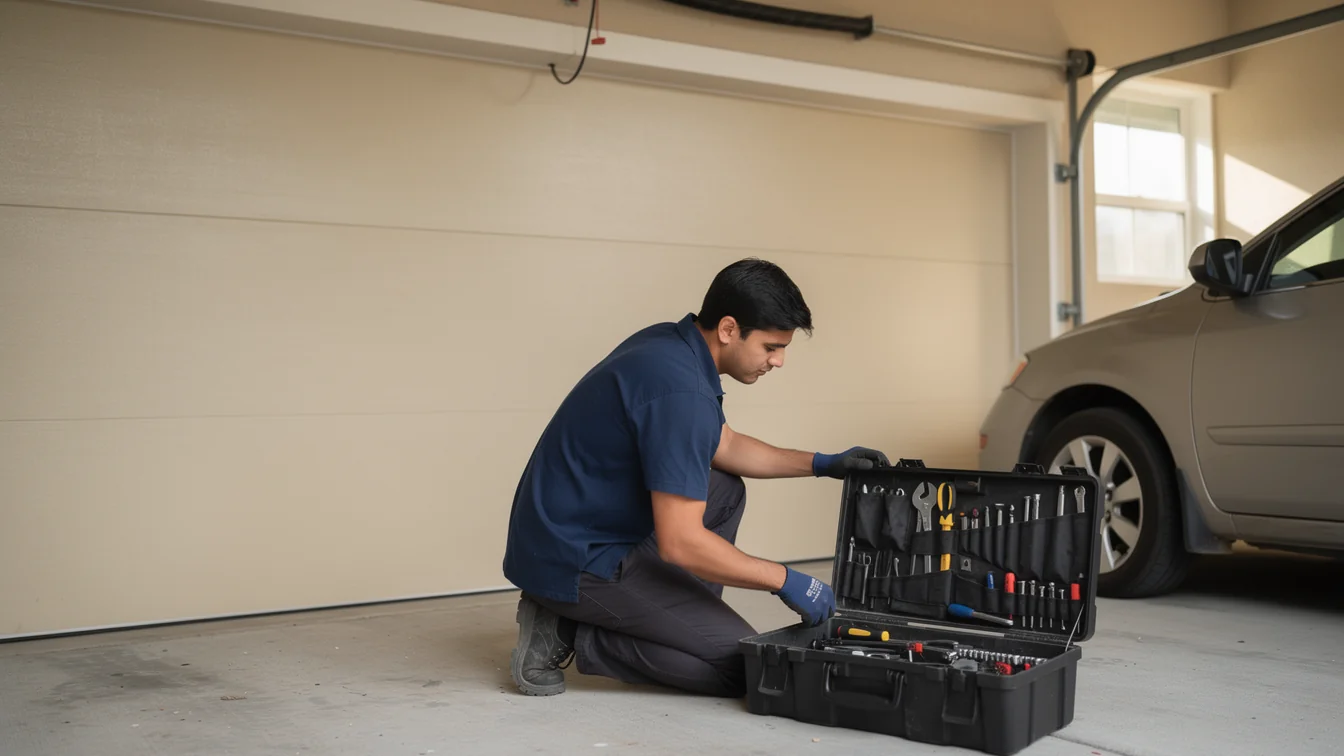
We're not going to list a number here, because what a call runs depends entirely on what's wrong, and on this stretch of Somerset County that's rarely one simple thing. A house built in the median year for this area - 1966 - usually still has its original track and jamb geometry even if the opener's been swapped twice since. That changes what parts go into a repair versus a straight replacement. A torsion spring job on a door from that era is a different scope than resetting a cable on a door installed in the 1990s, which is the other common vintage we run into between here and the surrounding towns. What we can tell you up front is what the visit covers: a full inspection of springs, cables, rollers, track alignment, and the opener's force and limit settings, not just a fix of the one symptom you called about. If the door needs a part we don't carry on the truck, we tell you before we start, not after.
One honest limit: if your panels are rusted through or the door is older than its hardware can safely support, we'll say so rather than patch something that's going to fail again in six months.
Checking It Yourself
Before you call anyone, there are a few things worth looking at, especially if your house dates to the 1960s or 70s stock that's common across this area's older sections. Pull the release handle with the door down and try to lift the door by hand. If it's hard to lift past waist height, that's a spring losing tension, not an opener problem - don't let anyone tell you otherwise. Look at the tracks for gaps where they bolt to the framing; houses from that build era often have jambs that have shifted slightly over fifty-plus years, and a track that's pulled even a quarter inch off plumb will bind a roller.
Check the bottom seal too. On original doors from this era, the astragal is usually the first thing to crack, and once it does, cold air gets under the door and the bottom panel takes the brunt of winter swings. None of this requires tools, and all of it tells us something useful before we ever show up.
How Local Conditions Play In
This area sits in a severe cold climate band, and that matters more for garage doors than people expect. Steel contracts in cold weather, and a spring that's been running a little under-tensioned all summer will feel noticeably tighter and harder to lift once temperatures drop. We see a seasonal spike in spring calls for exactly that reason - not because the spring broke overnight, but because the cold exposed wear that had been building for months.
Lubricant matters here too. A lot of houses in this area still have original rollers and hinges that were greased once, decades ago, and never since. In a mild climate that might not matter much. In a cold one, dried-out hardware seizes faster and puts more strain on the opener trying to force a door that isn't moving freely. If your door has started making a new noise only since the weather turned, that's almost always hardware reacting to cold, not an opener failing.
What Is Going On
Most of what we're called out for in Bridgewater and the towns around it - Raritan, Somerville, Martinsville, Branchburg - comes down to age meeting weather. Housing here runs from 1938 up through 2001, with the bulk of it in that 1960s-70s band, which means a lot of doors, tracks, and openers that are original or close to it. That's not a knock on the houses; it's just a fact about what's installed and how long springs and cables have been doing their job without being looked at.
When we diagnose a call, we're usually sorting between three things: a spring or cable that's simply worn out from age, hardware that's seized or misaligned from cold-weather stress, or an opener that's compensating for a mechanical problem instead of the problem getting fixed at the source. Telling those apart is most of the job. A new opener bolted onto a door with a bad spring will still strain and fail early - we'd rather fix the actual cause than sell you a part that papers over it.
Frequently asked questions
Do you charge extra for an inspection if it turns out to be a small fix?
No - the visit includes checking springs, cables, track, and opener settings regardless of what the actual repair ends up being. We'd rather catch something small now than have you call back in a month for a related failure.
Why does my door feel harder to open in winter?
Steel hardware contracts in cold weather, and in this area's climate that's a real factor. A spring running slightly under-tensioned will feel noticeably worse once temperatures drop, even though the underlying wear has been building for a while.
My house is from the 1960s - is that a problem for parts?
Not usually a problem, but it does change the job. A lot of houses built around that time still have original track and jamb geometry, so repairs sometimes need to account for shifted framing rather than just swapping a part.
Is it ever not worth repairing the door?
Yes. If panels are rusted through or the hardware is past what it can safely support, replacement is the honest answer. We'll tell you that during the visit instead of patching something that's likely to fail again soon.
Related garage door services in Bridgewater
More garage door guides
Book garage door service in Bridgewater
Call now or request a quote - tell us what the door is doing and where you are.