
Bridgewater, NJ · Garage Door Service
What We Look At Before We Quote Your Repair
Bridgewater homes run mostly 1960s-70s build, original hardware and all. See exactly what a technician checks first before quoting your garage door repair or replacement.
- Repairs & new doors
- Springs & openers
- Serving 6 nearby communities
What It Costs
We don't quote a number over the phone, and we're not going to pretend we can from a description of a noise. What a torsion spring repair runs and what a full opener swap runs are two different conversations, and the only honest way to get there is to look at the door in front of us. What we can tell you is how we get to that number: we check whether it's the spring, the cable, the track alignment, or the opener itself, because those are different jobs with different parts and different labor. On a lot of the doors we see around Bridgewater, the original hardware is still in place from when the house was built, somewhere between 1938 and 2001 with most of the stock dating to the 1960s and 70s. That age matters for cost because parts for an older torsion setup aren't always the same part you'd grab for a door installed five years ago. If your door is original to a house from that era, expect the tech to spend a few extra minutes confirming spring size and drum type before any number gets written down.
Checking It Yourself
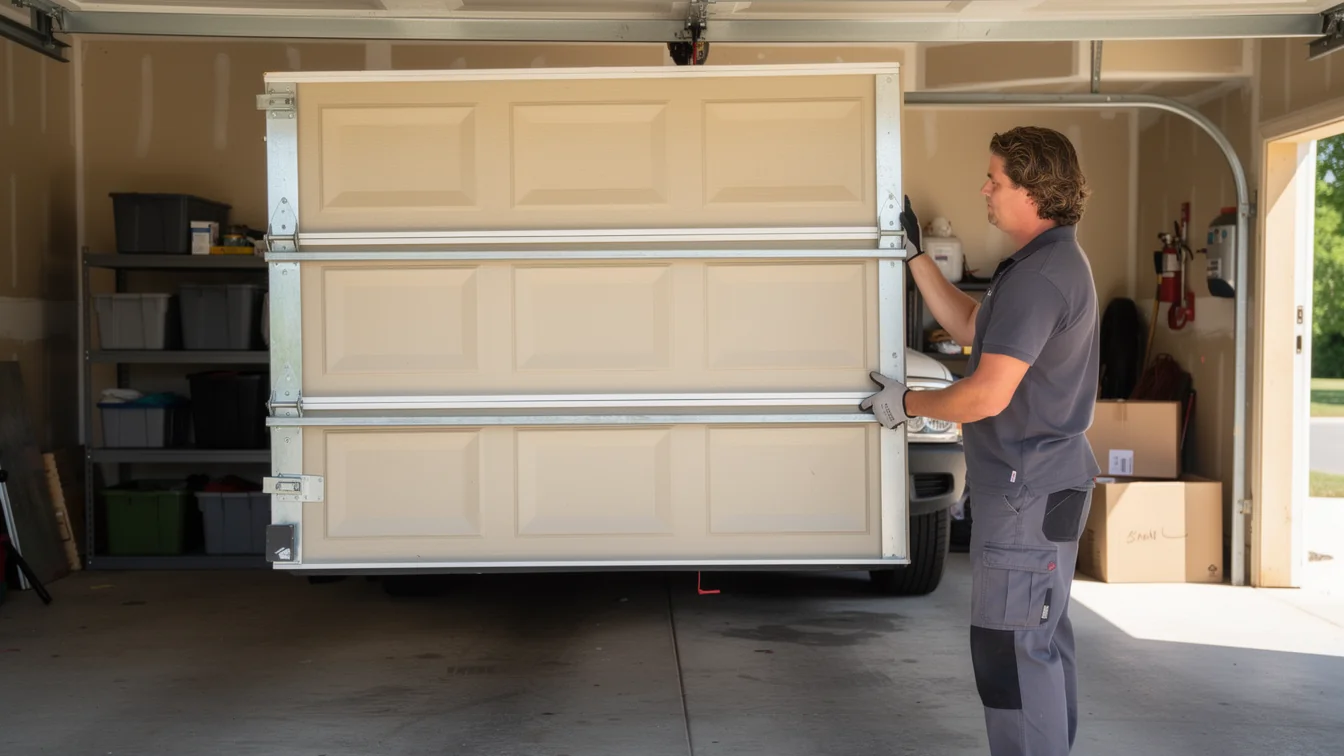
Before you call anyone, there's a short list worth running through. Stand the car outside, pull the release, and lift the door by hand. If it's heavy or drops on its own, the spring is losing tension or already gone, and that's not a DIY fix given how much force is stored in it. Listen for grinding versus popping: grinding usually points to a roller or track issue, popping to a cable or a bent panel seam. Look at the bottom corners of the door for rust streaking, especially on the torsion spring itself and the cable near the drum, since years of cold, damp winters on original hardware will show up there first on houses built in the 1960s and 70s. Check the weatherstripping along the bottom edge; if it's cracked or compressed flat, that's a $20 fix you can do yourself and it's worth ruling out before assuming something structural. What you shouldn't touch is the spring itself, or anything bolted to the spring. That's where we draw the line between a homeowner job and a call to us.
How Local Conditions Play In
Bridgewater sits in a climate band rated cold and severe, and that shows up in specific ways on a garage door. Steel panels contract in low temperatures, which tightens tolerances at the track and can turn a slightly misaligned roller into a grinding noise that wasn't there in October. Torsion springs lose a measurable amount of lift capacity as the metal cools, so a spring that was marginal in summer can feel like dead weight by January. Grease and lubricant on cable and rollers thickens in cold, which is part of why doors that ran quiet all summer start groaning the first hard freeze. None of this is unique to one house, it's a function of the winter swing this area gets every year, and it hits original hardware from the 1960s and 70s harder than anything installed in the last decade with modern seals and synthetic lube. If your door has gotten noticeably louder or heavier only since the weather turned, that's the climate talking, not a coincidence.
What Is Going On
Most of what we diagnose on a first visit in this area traces back to the age of the house. Housing here was built mostly between 1938 and 2001, with a median build year around 1966, and that means a lot of original one-piece or early sectional doors still running on side-mounted torsion hardware that nobody stocks new anymore. Across the hundred or so named neighborhoods and surrounding towns that make up this stretch of central New Jersey, from Raritan two miles out to Bedminster at five and Basking Ridge further on, the bulk of the housing stock shares that same 1960s-70s era, which means the same wear patterns show up house after house. With median household income in the area over $130,000, most of the calls we get are repair calls first; people want the door fixed, not necessarily replaced, unless the door itself has failed structurally. A technician's first job on an older door is figuring out whether what's wrong is a worn part or the door telling you it's done. Those are different repairs, and sometimes different conversations.
Frequently asked questions
Why does my garage door get louder in winter?
Steel panels and track hardware contract in cold, tightening tolerances at the rollers, and lubricant on the cable and track thickens. On older torsion hardware common in houses built in the 1960s and 70s around here, that combination often turns a quiet door into a noisy one once temperatures drop.
Should I replace or repair an original door from the 1960s?
It depends on what's actually broken. A spring, cable, or roller issue on an otherwise sound door is almost always a repair. If the panels are rusted through or the door is racking in the track, replacement usually makes more sense than chasing repairs on hardware that old.
Can I tighten or adjust the torsion spring myself?
No. A torsion spring holds enough stored force to cause serious injury if it releases wrong. Everything else on this list is fair for a homeowner to check; the spring itself is the one thing we'd ask you to leave for a call.
Related garage door services in Bridgewater
More garage door guides
Book garage door service in Bridgewater
Call now or request a quote - tell us what the door is doing and where you are.