Bridgewater, NJ · Garage Door Service
Roller Replacement for Basking Ridge Garage Doors
Garage door roller replacement for Basking Ridge homes built around 1972, serviced from Bridgewater 9 miles away. Steel and nylon roller options for cold-climate tracks.
- Repairs & new doors
- Springs & openers
- Serving 6 nearby communities
Doing It Yourself
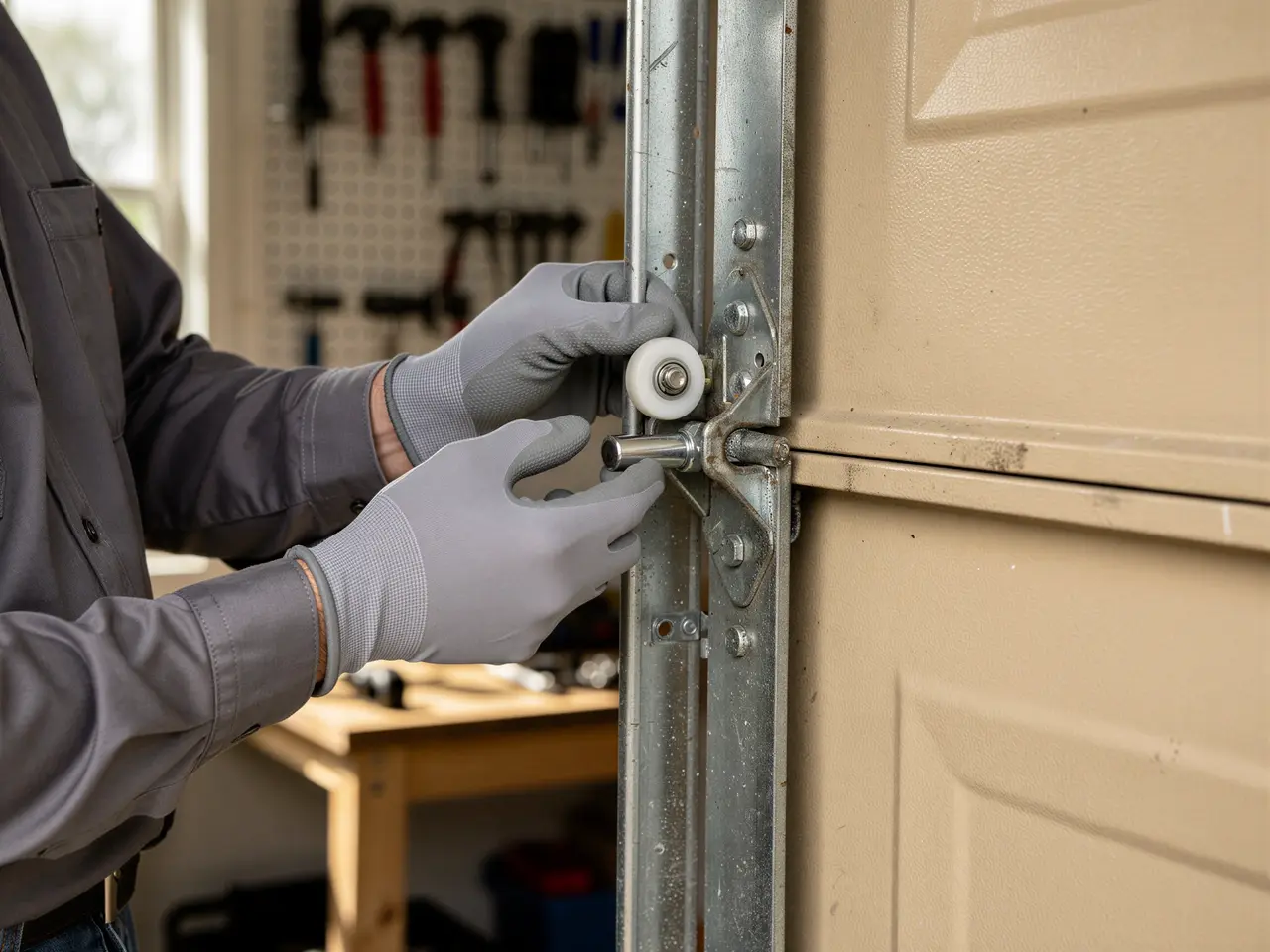
A lot of the doors we see in Basking Ridge are still running on whatever rollers went in when the house was built, somewhere around 1972. That's half a century of steel-on-steel wear, and most owners have never touched them because the door still opens - it just sounds like a freight train doing it. Swapping rollers yourself is possible if the door is down, the opener is unplugged, and you're only replacing the non-load-bearing rollers away from the bottom bracket. Those bottom ones sit under spring tension and that's where people get hurt. Pull the retaining clip, slide the old roller stem out of the hinge, seat the new one, and work your way up one hinge at a time so the panel doesn't shift out of the track. If a roller has seized in a bent track, or if you're not sure which rollers are under tension, that's the point where we'd tell you to stop and call rather than force it. Replacing a track takes different tools and more time than most people want to spend on a Saturday, and bent track is a common finding on doors this age - the original track was never engineered for today's heavier insulated sections.
Parts We Carry
We carry sealed-bearing nylon rollers as the standard upgrade for anything coming off original steel wheels, plus 10-ball and 13-ball steel rollers for doors where the owner wants to match what's already there rather than switch materials. Nylon runs quieter and doesn't need the lubrication steel rollers do, which matters once winter sets in and grease stiffens up in an unheated garage. We stock stem lengths and roller diameters to match older hardware, since doors from the early 1970s often used a shorter stem than what ships standard today. What we don't stock on the truck is anything custom-sized for a non-standard track width - those get special-ordered, and that's a lead time we can't shortcut.
What You Are Seeing
If the door in Basking Ridge is still on its original rollers from a 1972 build, you're looking at wheels that have made somewhere near 20,000 open-close cycles with no bearing replacement. The tells are consistent: a grinding or clicking sound right as the panel crosses the curved section of track, a door that jumps or hesitates at the same spot every time, and a track that's shiny-worn on one side from a roller riding slightly off-center. Flat spots on the roller wheel itself show up as a rhythmic thump instead of a smooth roll. None of this is subtle once you know what you're listening for, and none of it gets better on its own - a roller that's starting to bind puts extra load on the next roller down the track, so one worn wheel becomes two, then three.
Why It Happens Here
Basking Ridge sits about 9 miles from our Bridgewater base, and the housing here clusters tighter around 1972 than the wider service area's 1938-to-2001 spread - which means a lot of these garages got their rollers the same year and they're all wearing out around the same time. The region sits in a cold-climate band with real seasonal swings, and steel rollers in an unheated garage go through daily contraction and expansion that nylon handles better. We also see higher household incomes here than the service-area median, which tends to mean owners replace worn hardware before it fails completely rather than running a roller to the point of derailing the door - a smaller, cheaper fix if you catch it early.
Frequently asked questions
How do I know if it's the rollers or the opener making the noise?
Run the door manually with the opener disconnected. If the grinding or clicking still happens as you pull it by hand, it's mechanical - almost always rollers, track, or hinges, not the opener. If the noise only happens when the opener is driving the door, it's more likely the motor unit or the chain/belt.
Can I replace just some of the rollers instead of all of them?
Yes, and it's often the right call if only a few are worn. The ones at the bottom brackets carry spring tension and are riskier to handle yourself - those we'd rather swap for you. Upper rollers away from the brackets are a reasonable DIY job if you're comfortable with hand tools.
Will nylon rollers fix a noisy door on their own?
Usually, if the noise is coming from worn steel wheels. If the track itself is bent or the hinges are loose, new rollers alone won't quiet things down - we'd check the whole roller path before quoting just a roller swap.
More garage door services in Basking Ridge
Book garage door service in Bridgewater
Call now or request a quote - tell us what the door is doing and where you are.