Bridgewater, NJ · Garage Door Service
Garage Door Service for Basking Ridge Homes
Garage door repair and service for Basking Ridge homes built around 1972, serviced from our Bridgewater shop nine miles out. Springs, openers, and tracks.
- Repairs & new doors
- Springs & openers
- Serving 6 nearby communities
Doing It Yourself
Basking Ridge sits nine miles from our shop in Bridgewater, which is close enough that a same-day call is realistic but far enough that we plan the route before we leave, not after. That matters for what you should try yourself first. If a door won't open, check the obvious: the wall switch for the opener, whether the safety sensors near the floor are aligned and the little lights on them are solid, and whether anything is pulled the emergency release cord by accident. Those three things account for a good share of "my opener is dead" calls and you can fix all of them without a truck showing up.
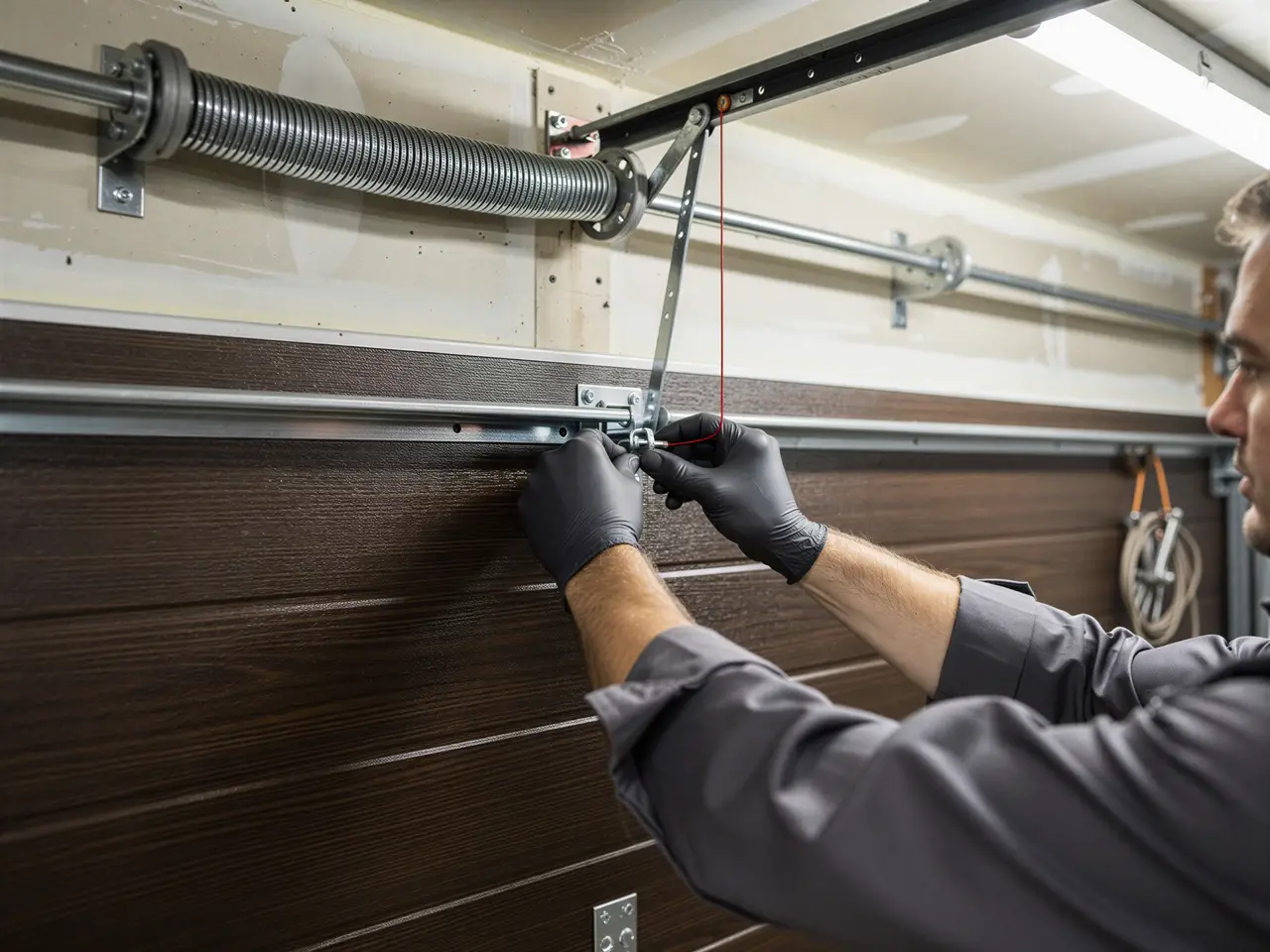
What you should not do yourself is touch a torsion spring. The spring over the door is wound under enough force to break a wrist or worse, and we don't walk anyone through that over the phone no matter how confident they sound. If a cable has come off a drum, same answer - leave it. Call us for anything involving the spring, the cables, or the drums, and save the DIY for the opener logic board, the sensors, and basic lubrication of rollers and hinges, which is genuinely fine to do yourself with a can of garage-door-specific lubricant, not WD-40.
Parts We Carry
Basking Ridge's housing mostly went up around 1972, a bit newer than the 1966 median across the wider service area, which means the openers we see here are a step up from the chain-drive units common on the oldest streets, but the springs and track hardware are frequently original or a first replacement from decades ago. We stock standard torsion springs in common wire sizes, extension spring sets, nylon and steel rollers, and safety sensor kits that fit most openers installed from the 1970s forward.
What we don't carry on the truck is anything proprietary to a specific opener brand's smart-home module or a discontinued panel style - those get special-ordered, and we'll tell you honestly if that means a wait rather than pretend we can match a 1970s wood panel from stock. For a household base this size, with 2,899 households in town, we're not trying to guess what to carry; we carry what fits a 1972-median build and order the rest.
What You Are Seeing
A door that reverses halfway up, or slams down instead of lowering slowly, usually points to a spring that's lost tension - common on hardware installed when these houses were built and never replaced since. If your door is loud in a specific spot on the track rather than evenly noisy, that's usually a bent track section or a roller that's worn through its nylon sleeve, not something the opener itself is doing wrong.
On newer openers common to 1970s-and-later construction like much of Basking Ridge, a door that won't respond to the remote but does respond to the wall button often means a dead coin battery in the remote, not a motor problem - worth checking before anyone assumes the worst. If the opener runs but the door doesn't move, check whether the trolley has disengaged from the carriage, which happens more than people expect after a power outage when someone pulled the release and never reset it.
Why It Happens Here
This whole corridor sits in a climate zone with real winter severity, and cold is hard on garage door hardware in specific ways: steel springs lose some flex in deep cold and are more likely to snap on a cold morning than a mild afternoon, and nylon rollers get brittle and crack rather than wearing down gradually. None of that is unique to this one street, but it is consistent across homes built in the 1960s-70s window that makes up most of the stock around here, Basking Ridge included.
Houses from the early 1970s typically came with heavier doors than the hollow aluminum styles from a decade earlier, which puts more strain on original springs that were never upgraded to match. Combine the two - older spring sizing on a heavier door, in a climate that stresses steel - and you get the pattern we actually see on service calls out this way: spring failure clustering in the coldest stretch of winter on doors that are original or close to it.
Frequently asked questions
How far is Basking Ridge from your shop in Bridgewater?
About nine miles. We don't have a branch in Basking Ridge itself - every job here is a truck coming from Bridgewater, so we plan the route and bring parts based on what's common for homes built around 1972 in this area.
My house in Basking Ridge is from the early 1970s. Does that affect what breaks?
Yes. Homes from that era tend to have heavier doors than the decade before, often still running on original or first-replacement torsion springs sized for the original load. That combination, plus real winter cold, is why spring failure is the most common call we get from this part of town.
Do you carry parts for older opener models?
We stock common torsion springs, rollers, and sensor kits that fit most openers from the 1970s forward. Proprietary parts for a specific brand's older smart module or a discontinued panel style usually have to be special-ordered - we'll tell you upfront if that's the case rather than guess.
More garage door services in Basking Ridge
- Garage Door Cable Repair in Basking Ridge
- Garage Door Repair in Basking Ridge
- New Garage Door Installation in Basking Ridge
- Off-Track Garage Door Repair in Basking Ridge
- Garage Door Opener Installation in Basking Ridge
- Garage Door Roller Replacement in Basking Ridge
- Garage Door Spring Repair in Basking Ridge
Book garage door service in Bridgewater
Call now or request a quote - tell us what the door is doing and where you are.