
Bridgewater, NJ · Garage Door Service
Installing New Garage Doors for Basking Ridge Homes
New garage door installation in Basking Ridge, NJ, sized to 1972-era homes and cold-climate code, installed by the Bridgewater crew traveling 9 miles out.
- Repairs & new doors
- Springs & openers
- Serving 6 nearby communities
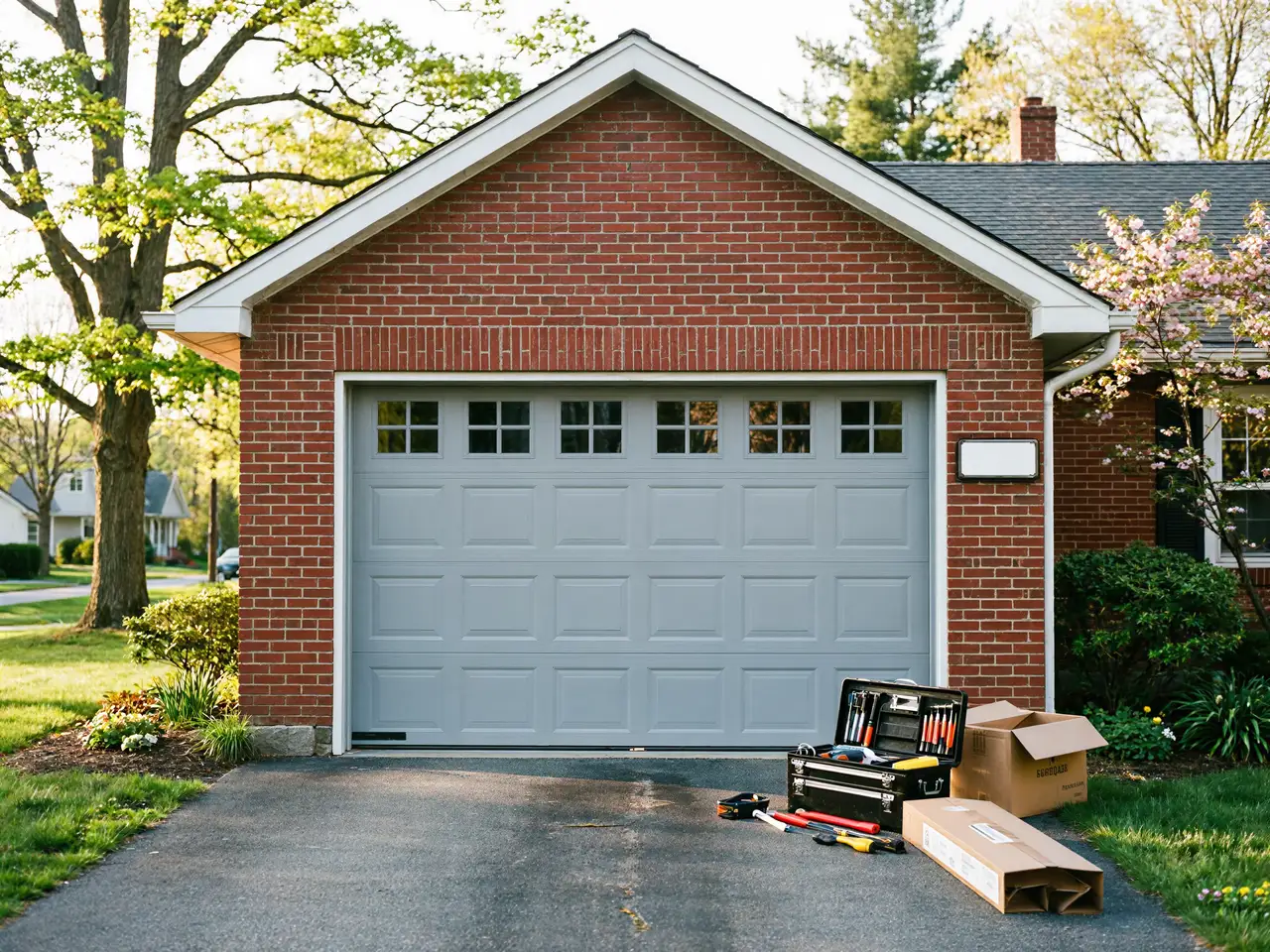
Doing It Yourself
Basking Ridge is small - about 2,899 households total - so when a garage door job comes up here, it's rarely a cookie-cutter swap. Most of the homes in this part of Somerset County were built around 1972, which means a lot of single-car and two-car openings sized to specs that don't always match what's sold off the shelf today.
If you're thinking about swapping an old door yourself, the biggest obstacle is torsion spring tension, not the panels. A spring wound for a 1970s-era door carries real force, and getting the lift cable routing wrong can bend a track or worse. We also build to the cold-weather load requirements that apply across this area, and matching those specs without the right gauge of track or correct backroom clearance is where most DIY jobs go sideways.
Our honest take: measuring the opening, pulling the old panels, and prepping the area is fine to do yourself. Setting springs and running a new opener is not a place to save money if something's off - a door that's out of balance wears out an opener in a season. We travel in from Bridgewater, about 9 miles, so we'd rather set it right the first visit than come back for a fix.
Parts We Carry
Given that houses here date to around 1972, the openings we size doors for tend to run standard 16x7 and 9x7, though we always measure before ordering - older framing settles and actual rough openings drift from the original spec over the years.
Because this area sits in a cold climate band, we stock insulated steel doors with a real thermal break, not just a door with foam glued to the back. At $200,378 median household income locally, well above the wider service area's $130,938, we see more owners choose the higher R-value, insulated-core doors over the bare minimum option - the upgrade cost matters less here than it does in some of the other towns we cover.
We carry torsion springs cut to match the taller ceiling clearances common in homes from this era, double-track rollers for heavier insulated panels, and weatherstripping kits sized for the slightly irregular jambs you get on a fifty-year-old opening. What we don't stock is anything exotic - custom glass-panel or carriage-style doors get special-ordered, and that adds lead time we can't shorten.
What You Are Seeing
If your door is from the original 1972 build, you're probably looking at a plain steel panel door with no insulation and a single layer of skin - common for houses from this era across this part of the county. The tells are a cold garage even with the door shut, a bottom panel that's rusted or dented from decades of use, and an opener straining harder in January than it did in July.
Sagging is another sign. On an uninsulated steel door that age, the panels can bow slightly between the vertical seams, which throws off the roller alignment and makes the door noisier every month that passes. If the weatherstripping along the bottom is cracked or missing entirely, that's original too - it wasn't built to last fifty winters.
None of this means the door is unsafe to use today, but once a panel is bowed enough that the roller binds in the track, repair stops making sense. At that point you're paying repair money toward a door you'll still want to replace within a year or two, and that's the point we'll tell you plainly instead of billing you twice.
Why It Happens Here
The pattern traces back to when this area was built. A lot of Basking Ridge went up around 1972, squarely in the stretch of construction that runs across Bridgewater's whole service area - homes from 1938 through 2001, with most of the stock concentrated in the 1960s and '70s. Doors installed then were built to the standards of their decade, not ours, and nobody was specifying insulated cores or thermal breaks on a steel door in 1972.
Layer the cold climate band on top of that, and the failure mode is predictable: an uninsulated door built fifty years ago, sitting in a garage that sees real winter, develops exactly the symptoms described above - sagging panels, iced bottom seals, an opener working overtime. It's not bad luck or bad maintenance. It's a door built for a different set of expectations finally meeting its age.
We come out from Bridgewater, about 9 miles away, to handle these jobs, and the volume we see from this specific town reflects its size - with under 3,000 households total, a handful of install jobs a month is typical, not the daily volume we'd see in a larger town nearby.
Frequently asked questions
How old are most garage doors in Basking Ridge?
Most homes here date to around 1972, so original doors are typically uninsulated steel panels on older torsion hardware. If yours hasn't been replaced, it's likely pushing fifty years old and due for an upgrade, especially given the cold winters this area gets.
Do you carry insulated doors for cold winters?
Yes. This area sits in a cold climate band, so we stock insulated steel doors with a real thermal break rather than foam glued on after the fact. Given Basking Ridge's income level, most owners we talk to here choose the higher R-value option over the base model.
How far do you travel to Basking Ridge?
We run out of Bridgewater, about 9 miles away. We don't keep a branch or drop-point in Basking Ridge itself, so installs here get scheduled rather than treated as a same-day walk-in.
More garage door services in Basking Ridge
Book garage door service in Bridgewater
Call now or request a quote - tell us what the door is doing and where you are.